Have leaves blown into your gutters in recent months? Gutters for Australian homes don’t just hold rain and dispel it; gutters put a stop to the long-term issues. Without a guttering system, your property is vulnerable to water damage, including water around your foundations, differential settlement throughout the house, and even water flowing into a neighbour's backyard!
Most plumbers do the right thing, but some do not take the time to check their work, which causes clogged gutters and downpipes and water damage to properties. How do your gutters look?
This blog will be your best guide to gutter and drainage options for your property.

Gutters put a stop to water damage, erosion, and structural issues all year round, but why is proper drainage so important? Why is water ingress such a big risk? When water penetrates the water envelope, your structure can be gradually (or immediately) damaged. Over time, this can cause wood to rot, metal components to corrode, or harmful mould to grow. The longer water ingress is left, the more severe the damage can be (and the more expensive it is to repair).
For example, plumbing practitioners must educate consumers on the importance of maintaining drainage systems, and this includes balcony, roof drains and overflow devices. Clear advice needs to be given regarding the risks of neglected gutter systems and how regular inspections prevent water ingress.
A licensed and registered plumber can also engage with you to inspect your gutters and address any issues. With this in mind, what can you do to ensure your gutters protect your property as they should?
As a rule of thumb, always check your gutters and downpipes safely before winter! Twigs, leaves and debris can almost act like a dam, stopping the flow of rainwater and pushing it towards your foundations, so it’s a good idea to have a reliable gutter maintenance plan in place! Leaf litter build-up in gutters may cause corrosion or lead to the development of mould and damage that can be more costly to repair.
Debris buildup blocks gutters, but can also attract pests such as mosquitoes. Even worse, clogged up guttering systems can put it at risk of sagging or detaching completely.
How often do you need to clean your gutters? It is professionally recommended to clean gutters at least seasonally, but if you have a lot more trees in your area, you might want to clean monthly. This article by the Victorian Building Authority states that clearing of blockages that require the gutter or downpipe to be detached or altered must be carried out by a licensed or registered plumber.
Use a sturdy ladder, wear gloves when using a gutter scoop (being careful not to damage the gutters), and then use a garden hose to flush out the downspouts. When checking your own gutters with a ladder, you should always follow the ladder safety rules on the WorkSafe website.
However, if you’re unsure, reach out to a roofing contractor to help you with the cleaning.
The slope of your gutter is responsible for directing rainwater, stopping overflows, and preventing water damage to your home. It needs to be precise, or else it won’t dispel rainwater properly. If a gutter were flat, water would just sit in there instead of moving towards the downspout.
A correct gutter slope keeps water moving, gets rid of stagnant water, repels roof rot, distributes water weight evenly, and ultimately protects gutters from detaching or sagging under the pressure of pooled water.

So, what is the right slope for your home? There needs to be a gentle decline that encourages water to flow. According to this Victorian Building Authority file, these are some of the steps required when sizing a roof catchment draining system for domestic houses with eaves gutters:
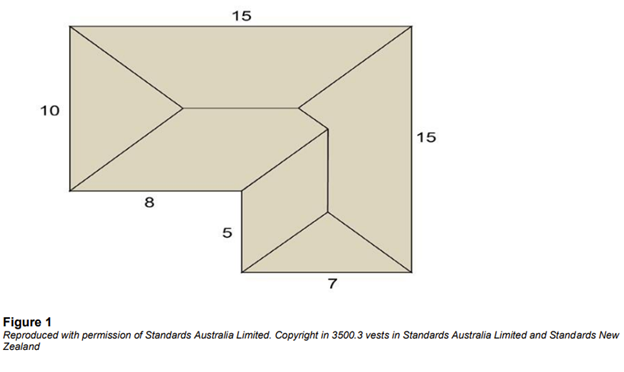
The example above is a typical single-storey dwelling built in Melbourne CBD with a roof pitch of 23.
Gutter guards work as a physical barrier. In Victoria, gutter guards are optional but need to be non-combustible if installed (especially in areas prone to bushfires). The Australian Standard AS3959-2009
The National Construction Code discusses the installation of gutters. Eaves gutters must be installed with a fall of not less than 1:500 and supported by brackets securely fixed at stop ends, corners and at no more than 1.2 m centres, and fitted with overflow measures capable of removing the overflow volume specified in Table 7.4.4a and Table 7.4.4b.
What about acceptable continuous overflow measures? A front face slotted gutter with a minimum slot opening area of 1200 mm2 per metre of gutter, and the lower edge of the slots installed a minimum of 25 mm below the top of the fascia.
What about an acceptable dedicated overflow measure per downpipe? For an end-stop weir with a minimum clear width of 100 mm and a weir edge installed a minimum of 25 mm below the top of the fascia, the acceptable overflow is 0.5 L/s constructed in accordance with Figure 7.4.7a.
Downpipes must not serve more than 12 m of gutter length for each downpipe, be located as close as possible to valley gutters, and be selected according to the appropriate eaves gutter section as shown in Table 7.4.3a, Table 7.4.3b and Table 7.4.3c.
A maximum 12 m gutter length served by each downpipe is to ensure effective fall and capacity to discharge all water during a storm, with an annual exceedance probability of 5%. If a rainhead overflow device is incorporated at the top of the downpipe, its overflow discharge should be directed away from the building.
With careful design, planning and following Australian standards, you can design a guttering system that protects your home from water damage!
The roof’s surface (slope) impacts how well it drains, so a minimum slope of 5° is recommended for water flow. A steep roof makes for faster run-off, but it needs gutters that can handle the water speed!
Pick a gutter with a larger capacity for heavy and light rainwater, such as half-round gutter designs. This will stop overflowing and damage during storms.
In terms of drainage capacity, gutters need to be placed correctly to prevent leaking between eaves and gutters. For example, box gutters are recommended for flat roofing since they are efficient at handling water. Colorbond steel roofing is also a great choice as it is resistant to corrosion, chipping, and cracking, as it is coated in an Activate technology.
Whether you need gutter replacements, custom made flashings, downpipes, or klip-lok roofing, Xclusive Roofing is qualified to support you with roof repairs, roof tiling, extensions and roof replacements, and roof leak detection.
The VBA recommends the following for homeowners:
When designing box gutters, we work closely with licensed roof plumbers who will be installing them, so the design is compliant with local regulations.
We identify problem areas with your roof and can recommend the best solutions to improve the value and longevity of your roof and gutters. Wooden fascias can be overlaid with Colorbond steel fascia to protect the existing structure and provide a fresh new look.
Our guttering is accurately measured and installed to ensure leaks are eliminated and rainwater is effectively transferred to the ground. Get a free quote from us today, it’s obligation free!

Pay close attention to your gutters! Here are some things you might notice:
Sagging or pulling away from the house could mean structural issues or a faulty installation job by a previous roofing contractor.
Cracks or holes can lead to leaks and water damage. In some cases, you’ll notice water leaking from your roof and into your home.
Rust or corrosion, which is especially the case for aluminium, copper, or zinc gutters. The last thing you want to deal with is deterioration.
Water stains or mould inside the home or on exterior walls means that water could be getting in due to water pooling in your gutters.
Instead of sticking to aluminium guttering, why not upgrade to Colorbond steel guttering and fascia? It has five layers of protection against the Aussie elements, Thermatech solar reflectance technology, tested in Australian conditions, sustainable, fire resistant, easy to maintain, and warranty-backed by BlueScope. Consider reading our beginner's guide to understanding different roofing materials!
If you’ve never faced a roofing problem before and need guidance, Xclusive Roofing has years of experience in repairs, installations, and more. Discover why countless homeowners choose us for roofing support.
Do you want to invest in reliable gutter roofing for your Frankston, Seaford, Cranbourne, Dandenong, Beaconsfield, Berwick, Officer, Narre Warren, Pakenham, Hallam, or Mornington property?
Xclusive Roofing can help you with roof restorations, roof tiling, and create a guttering system that is completed to the standards of the Plumbing Code of Australia. We’re a family-owned business that supports you, even after hours!
Contact us by calling 03 5978 6473, emailing quotes@xclusiveroofing.com.au or visiting our yard in Clyde North for a closer look at our roofing options. Choose reliability, craftsmanship, and peace of mind for your home or business by reaching out to our friendly team.

Discover top-quality expertise. Satisfaction guaranteed!
 03 5978 6473
 Open
Hours: Monday - Friday 8:00am - 4:00pm
Open
Hours: Monday - Friday 8:00am - 4:00pm Emergency Repairs
 Email:
quotes@xclusiveroofing.com.au
Email:
quotes@xclusiveroofing.com.au

 Previous
 xclusiveroofing